
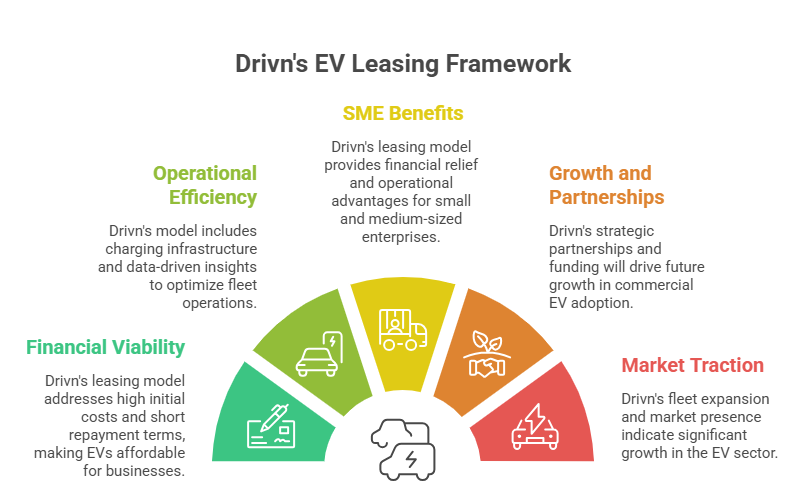
The transition to electric vehicles (EVs) in commercial fleets has often been hindered by high upfront costs and limited financing options. For fleet operators, the financial burden of shifting to electric buses and trucks can seem overwhelming, especially when traditional financing models do not match the operational lifespans of EVs. Drivn is tackling these challenges head-on with innovative EV leasing solutions designed to make EV adoption more accessible for commercial fleet operators in India.
The Financial Challenges of Commercial EV Adoption
Despite the clear benefits of EVs, such as reduced fuel and maintenance costs, commercial EV adoption remains slow. The primary challenge lies in the high capital expenditure (CapEx) required for purchasing electric buses and trucks. Traditional financing models, which often involve short repayment periods, are not well-suited for EVs, which require longer amortisation periods due to their higher initial cost.
Key financial challenges include:
- High Initial Cost: Commercial EVs often cost $100,000+, making them unaffordable for SMEs when compared to traditional diesel vehicles, which are significantly cheaper.
- Short Repayment Terms: Traditional loans typically offer short repayment terms (5 years or less), which do not align with the long lifespan of electric vehicles, especially when amortisation must extend over a longer period.
- Battery Life Mismatch: The lifespan of the battery doesn’t match the vehicle’s lifespan, leading to additional financing complexities. The need for separate financing for the battery further complicates the overall financing process.
- Limited Financing Options: Many financial institutions are hesitant to finance EVs due to perceived risks, limited historical data on EV performance, and uncertainty around the secondary resale market of EVs.
These challenges leave many fleet operators either deferring or completely avoiding EV adoption, despite the long-term operational cost savings.
How Is Drivn’s Leasing Solution Making Commercial EV Adoption Easier?
To overcome the financial challenges of adopting electric vehicles (EVs) in commercial fleets, Drivn offers an innovative EV leasing model that provides fleet operators with an accessible and sustainable solution. Here’s a breakdown of how Drivn’s is making the transition to EVs easier for businesses.
- Long-Term Leasing Options: Drivn is bridging the financing gap by offering long-term leasing options for commercial EVs. This model allows fleet operators to access electric buses and trucks without the hefty upfront cost. Instead of purchasing the vehicle outright, businesses can lease it for a set period, making the transition to EVs financially viable.
- Predictable Monthly Payments: Their unique approach centres around asset ownership combined with rental agreements, which enables them to offer predictable monthly payments for the vehicles, spreading the capital investment over time. This leasing model is particularly beneficial for SMEs that lack the capital to purchase high-cost EVs but still want to benefit from the operational efficiencies that EVs offer.
- Integrated Charging Infrastructure: The company’s business model also includes partnerships with fleet operators to provide charging infrastructure as part of the leasing package. This ensures that operators can maintain seamless operations, reducing the complexity and capital expenditure typically required to establish charging stations.
What Does the Future of EV Financing and Growth Look Like?
The future of commercial EV financing looks promising as demand for flexible financing options grows. With government initiatives pushing for the electrification of public transport, private sector involvement in EV adoption is expected to rise. Leasing models like Drivn’s will play a key role in reducing financial barriers for fleet operators.
Drivn is already gaining traction, securing $80 million in financing and planning to grow its fleet to 1,000 vehicles. By leveraging data-driven insights on vehicle performance and energy consumption, Drivn is improving fleet efficiency and reducing operational costs. As charging infrastructure and battery technology evolve, leasing models will become central to the growth of commercial EVs, making them a sustainable and practical choice for businesses.
Summary
Drivn’s leasing model is an innovative solution to one of the biggest barriers in commercial EV adoption: financing. By allowing fleet operators to lease electric buses and trucks with predictable payments, Drivn is enabling a smoother, more affordable transition to EVs. In the coming years, the widespread adoption of leasing models like Drivn’s could not only transform the logistics and public transport sectors but also make electric vehicles a practical, sustainable choice for businesses across the globe.
Frequently Asked Questions
Who are EV fleet operators, and how does Drivn support them?
EV fleet operators are businesses or organisations managing a group of electric vehicles for logistics and transport. Drivn supports these operators with tailored EV leasing solutions and fleet management services to optimise efficiency and sustainability
How are EV startups in India driving commercial EV adoption?
EV startups in India are solving key barriers like high costs and limited infrastructure. Players like Drivn are introducing leasing and bundled services, allowing businesses to adopt EVs without large capital investment, which is helping drive gradual adoption in the commercial space.
What does EV fleet management in India include?
EV fleet management in India involves tracking vehicle usage, battery health, charging cycles, and route efficiency. It helps businesses understand how their fleet is performing and where they can improve utilisation, reduce downtime, and manage costs better.
How is commercial EV fleet management different from traditional fleets?
Commercial EV fleet management focuses more on battery performance, charging planning, and energy usage. Unlike traditional fleets that revolve around fuel and maintenance, EV fleets require better planning around charging and range, making them more data-driven.
